Stop Guessing Your Results and Get Real Answers
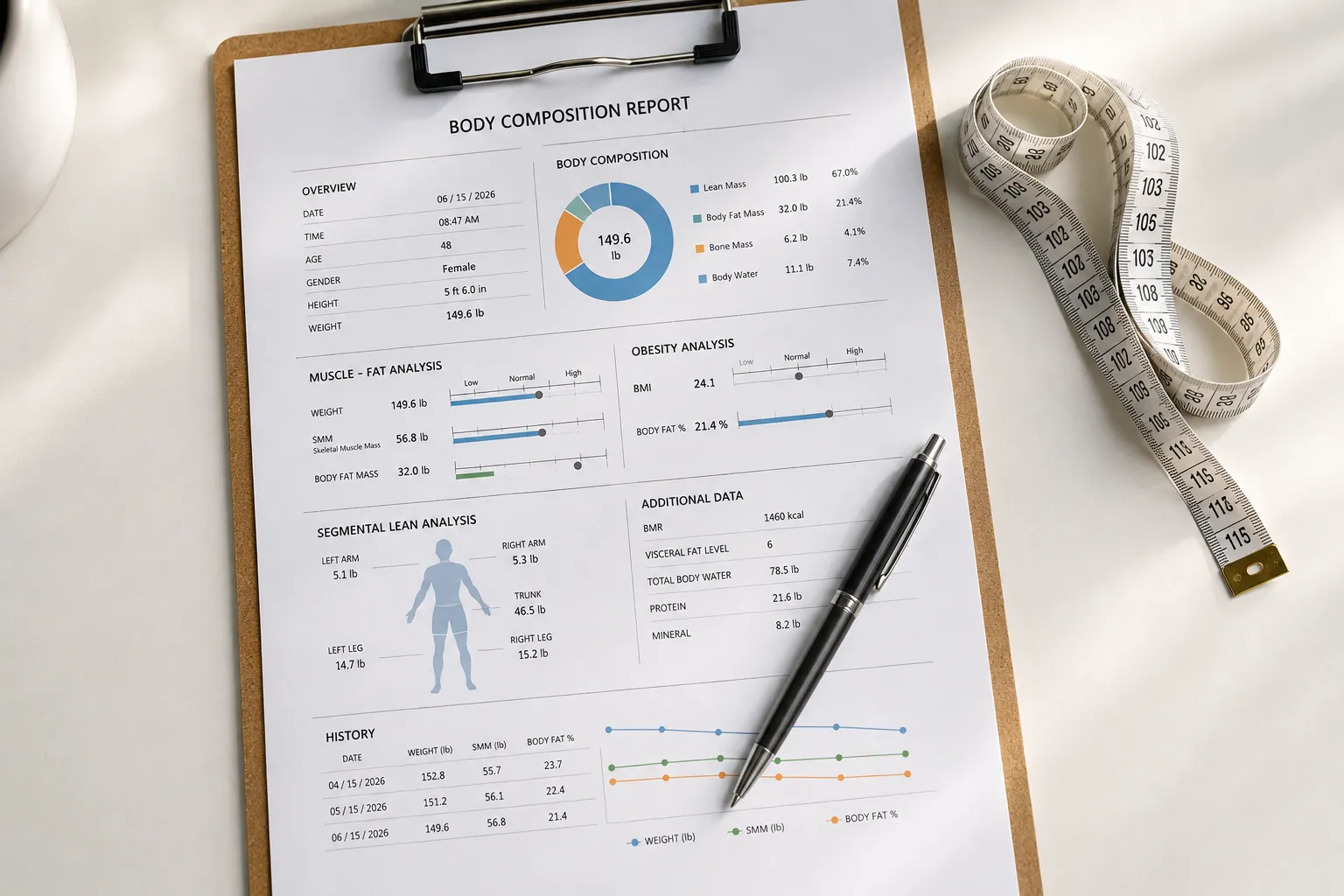
Stop Guessing Your Results and Get Real Answers
You train hard, you sweat, you clean up your eating, then you step on three different machines and get three different stories. One says you lost fat, another says you gained fat, and a trainer with calipers swears your body fat is “about the same.” Now you are stuck wondering if your work is actually paying off.
That is where a second-opinion fitness evaluation comes in. It is a focused review of your current numbers, the methods used to get them, and your actual program. The goal is simple: confirm what is really changing in your body so you can plan your next four weeks with confidence instead of guessing.
Right now, in Miami, a lot of people are coming back from trips, school is starting up again, and routines are shifting. It is the perfect time to reset, clear up confusion, and set clear fall goals. At our private one-on-one studio in Brickell, we put a big focus on accurate assessment and helping you turn data into a simple, realistic plan you can follow.
When Your Fitness Numbers Do Not Add Up
Mixed messages are frustrating. You might see:
- A gym scale saying you dropped a few pounds
- An InBody machine saying your body fat went up
- A trainer with calipers saying your body fat went down
How can that all be true? Here are a few reasons numbers do not match:
- Different technologies use different assumptions
- Testing at different times of day
- Changes in hydration or recent meals
- Human error with setup or measurements
There are also clear red flags that it is time for a second opinion:
- Body fat readings that swing wildly week to week
- Results that do not match how your clothes fit
- Numbers that say “no change” even though your training and food changed a lot
A structured fitness evaluation and testing in Miami can filter out that noise. We slow things down and look at the full picture, not just one random reading. That means:
- Reviewing your past test results side by side
- Standardizing when and how we test you
- Lining up numbers with what is actually possible for your body over 4, 8, or 12 weeks
When the process is cleaner, the story from your data gets a lot clearer.
DEXA, InBody, and Calipers Explained in Plain English
Body composition tools can sound fancy, but they do not have to be confusing.
DEXA: This is a clinical full-body scan. You lie still while a machine scans your body and breaks things down into bone, lean tissue, and fat. It is detailed and often used as a gold standard, but it takes more planning and you usually go to a medical or imaging facility for it.
InBody and other BIA devices: These are the machines you stand on or hold at many gyms. They send a small electrical signal through your body to estimate fat and muscle. They are fast and easy to repeat, but they can change a lot with water intake, food, and timing.
Skinfold calipers: A coach pinches your skin and fat at certain points, then uses those numbers to estimate body fat. They are simple and portable, but the accuracy depends heavily on the person doing the test and how consistent they are.
Different methods can help different people:
- Busy professionals in Brickell often benefit from quick, repeatable checks like InBody or calipers, as long as testing conditions stay the same.
- Older adults may care more about bone and muscle, so a DEXA scan from time to time, paired with gym-based checks, can be helpful.
- Weight-loss clients usually need regular feedback, so an affordable, repeatable method is often best for tracking trends.
For most people, one method for regular trend tracking plus an occasional deeper test works better than chasing “perfect” numbers from everywhere. The key is picking a main method and staying consistent with how and when you use it.
How to Validate Your Test Results Like a Pro
You can do a simple “sanity check” on your past tests by looking at:
- Test dates and how far apart they were
- Time of day for each test
- What and when you ate or drank before testing
- How hard you trained in the 24 hours before testing
- Clothing, shoes, and any items you had on your body
If one test was early morning, fasted, and after a rest day, but the next was after lunch on a hot, busy day, the numbers will not match well.
Next, look at realistic rates of change. In four weeks:
- Beginners may see clear fat loss or strength gains, but not extreme shifts
- Intermediate lifters usually change slower, especially in muscle gain
- Older adults often focus on holding muscle and slowly lowering fat
If a machine tells you that you gained a huge amount of muscle in a month, or dropped an unreal amount of fat, the reading is likely off. Your body does not rewrite itself overnight.
In a professional setting, we usually:
- Review three to six months of your test history
- Compare your numbers to real-world signs like strength, tape measurements, photos, and how clothes fit
- Pick one primary tool for body composition, used under consistent conditions
This turns your data into a story that makes sense instead of random numbers that stress you out.
Mapping Your Next 4-Week Plan From the Data
Once the numbers feel real, the next step is making them useful. A second-opinion fitness evaluation and testing in Miami should end with a simple four-week plan, not just a printout.
First, training focus. Based on your data, we might steer you toward:
- Strength focus: more attention on progressive overload with big lifts like squats, presses, and rows
- Fat loss focus: higher total weekly activity and some metabolic conditioning along with strength work
- Muscle preservation for older adults: joint-friendly strength training, controlled tempo, and smart exercise selection
Second, nutrition calibration. Instead of a big, stressful overhaul, we look at small, clear changes like:
- Adjusting total calories up or down in a measured way
- Making sure protein is high enough to support strength and muscle
- Tweaking meal timing around training for better energy
Third, monitoring strategy. We set expectations about:
- How often to retest, for example, every 4 weeks for fine-tuning or every 8 to 12 weeks for bigger-picture changes
- Which main method to rely on, such as one specific InBody device or the same caliper protocol
- Which “real life” markers to track, like daily steps, sleep, energy, and stress
Late August is a smart time to do this in Miami. You can lock in a focused September plan before work, school, and holidays pull your schedule in every direction. That way the next 4 to 12 weeks have a clear focus, not random workouts.
Turn Confusing Data Into a Clear Miami Game Plan
To get ready for a second-opinion session, you can start with a simple checklist:
- Gather all your old DEXA, InBody, and caliper reports
- Write the dates, times, and what your day looked like before each test
- Note big changes in training or food between tests
- List your current goals, like strength, weight loss, mobility, or longevity
- Circle the main things that do not make sense to you yet
At Dubail Fitness Institute in Brickell, we specialize in one-on-one strength coaching, weight loss support, and older adult fitness. A coach can walk through your old numbers with you, repeat key tests under controlled conditions, and turn everything into a simple four-week plan, with clear training targets and specific nutrition guidelines. That way your hard work lines up with real results, and your next month of training in Miami finally feels focused, not confusing.
Take The First Step Toward Measurable Fitness Progress
If you are ready to stop guessing and start training with precision, our team at Dubail Fitness Institute is here to help you understand exactly where you stand. Schedule your personalized fitness evaluation and testing in Miami so we can measure your current fitness levels and design a plan built around real data. We will walk you through every result in plain language and outline clear next steps that match your goals. Let’s turn your effort into progress you can see and track.