Turn Your Fitness Test Into a Clear 12-Week Roadmap
Turn Your Fitness Test Into a Clear 12-Week Roadmap
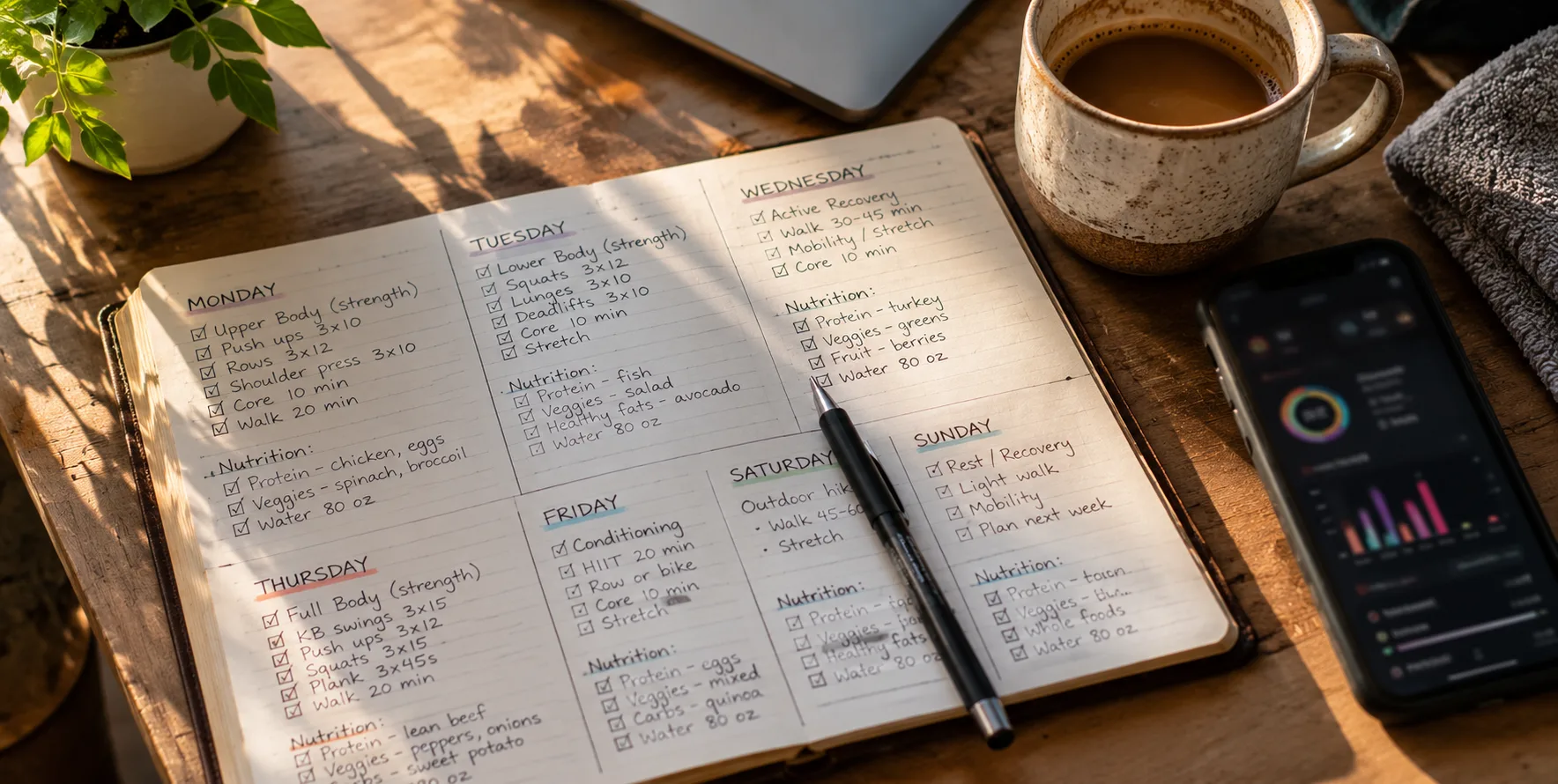
A fitness test should do more than hand you a sheet of numbers. It should tell you exactly what to do next, week by week, so you know how to train, how to eat, and what to track. When we turn test results into a real plan, your workouts stop feeling random and start feeling like a clear path.
October is a perfect time to do this in Miami. The year is winding down, holidays are coming, and it is very easy to say, “I will start in January.” Instead, you can use the last 90 days of the year to lose fat, get stronger, and go into the new year already in motion.
A professional fitness evaluation and testing in Miami usually includes things like:
- Movement screening and posture-checks
- Basic strength tests like squat, push, pull, and carry
- Body composition and waist measurements
- Simple cardio and heart rate tests
- Lifestyle questions about sleep, stress, work, and eating
Our goal here is to show you what those results really mean and how to turn them into a practical 12-week plan. At Dubail Fitness Institute, our private studio in Brickell is built around one-on-one coaching for adults who want realistic, long-term progress, not quick fixes that fade.
What Your Fitness Assessment Numbers Really Mean
When you get your printout or summary, it usually falls into a few main groups. Once you know what each group means, the whole test becomes easier to understand.
Body composition covers:
- Body fat percentage
- Lean mass or muscle mass
- Waist and hip measurements
Healthy ranges depend on age and sex, but the big idea is this: we want enough muscle to support strength and daily life, and a body fat range that supports health, hormones, and energy. A very low body fat is not always better. If you push too low, you can feel tired, lose strength, and find it harder to stick with training.
Strength and mobility testing looks at how you move and how strong you are in basic patterns:
- Squat and hinge
- Push and pull
- Carry and core stability
We watch for red flags like pain, strong left-to-right differences, or joints that feel “stuck.” Having poor mobility does not mean you should avoid strength training. It means we pick smarter, safer exercises and include focused mobility work so your joints feel better over time.
Cardio and recovery tests might include:
- How your heart rate rises with simple conditioning
- How fast it comes back down
- How you rate your effort and breathing
Your lifestyle data matters just as much. Sleep, stress, long work days, screen time, and your current eating habits all affect your numbers and your risk for aches, burnout, or weight gain. The bathroom scale alone cannot tell you if you are doing well. Two people can weigh the same, but one has more lean mass, moves better, and feels stronger. That is why body composition is so helpful.
Turning Test Results Into Clear 12-Week Goals
Once you understand the data, the next step is to turn it into 2 or 3 simple goals for the next 12 weeks. For example, you might aim to:
- Lose a steady amount of body fat
- Add a few pounds of lean muscle
- Improve your push-up or deadlift strength
- Lower your resting heart rate a bit
We like to set one primary goal and one secondary goal:
- Primary goal: fat loss, strength, or performance
- Secondary goal: mobility, posture, or conditioning
Your primary goal is where most of your training and nutrition focus goes. Your secondary goal supports joint health, energy, and how you feel day to day.
At Dubail Fitness Institute, we use your assessment results to map out weekly milestones instead of just saying, “See you in 3 months.” A simple layout might be:
- Week 4: quick body composition and movement check
- Week 8: strength and conditioning re-test on key moves
- Week 12: full re-evaluation of all starting markers
Starting in mid-October lines up nicely with this structure. Your 12-week plan runs through the holiday season and into early January. While most people are trying to undo holiday weight gain, you have already built better habits and real progress.
Building Your Weekly Plan From Your Assessment
Your test results should shape how many days you train each week and what each session looks like.
If your strength is low, we often focus on:
- 3 to 4 strength-based days each week
- Progressive resistance with safe, joint-friendly lifts
- 1 to 2 shorter conditioning sessions for heart health
If body fat is higher than you want, a good setup might be:
- 2 to 3 strength days to keep or build muscle
- 2 to 3 cardio or conditioning days
- Clear nutrition changes built around your schedule
If mobility issues or pain showed up, we build in:
- Targeted warm-ups for problem areas
- Mobility and corrective work in the middle of your session
- Exercise choices that do not flare up joints
At Dubail Fitness Institute, a 12-week block often breaks down like this:
- Weeks 1 to 4: Learn proper technique, find safe exercises, build consistency
- Weeks 5 to 8: Increase weights, reps, or total work based on your test starting point
- Weeks 9 to 12: Sharpen form, push intensity where safe, and prepare for re-testing
Here are a few examples based on results:
- Tight hips and poor posture: more hip mobility drills, split-stance leg work, and core stability in every workout
- Low upper body strength: extra focus on push and pull patterns, smart assisted versions of push-ups or rows, and steady strength progressions
Using Nutrition and Recovery Data to Accelerate Progress
Your assessment is not only about gym numbers. It also shows how you eat, sleep, and recover, which can speed up or slow down your progress.
If body fat is higher, we usually aim for:
- A modest daily calorie deficit, not crash dieting
- Protein targets based on your lean mass
- Simple, Miami-friendly meals that work with a busy workday
If muscle mass is low, we may suggest:
- Maintenance or a slight surplus of calories
- Higher protein, especially around training days
- Regular meals so your body has what it needs to build muscle
Recovery matters just as much as training. If your stress is high and your sleep is poor, we often adjust:
- Training volume, so you do not feel wiped out
- Intensity, so you can recover between sessions
- Simple routines at night to help sleep quality
Easy recovery markers include resting heart rate trends, how sore you feel, and your energy during the day. These help us see when to push harder and when to pull back. In a private studio setting, we can also use food logs, photo journaling, and weekly check-ins to make small tweaks so your plan fits your real life, not some perfect schedule on paper.
Re-Test Smarter and Lock in Your New Baseline
The real power of fitness evaluation and testing in Miami shows up when you repeat the same tests every 12 weeks. By checking body composition, key strength lifts, and conditioning again, you get proof of what changed.
A proper re-test looks like this:
- Same tests as your first session
- Similar conditions, like time of day and hydration
- A review of both the hard numbers and how you feel
We look for wins like:
- Better posture and movement quality
- More lean mass or slightly lower body fat
- Stronger lifts or easier cardio
- Better confidence and clothes that fit more comfortably
From there, you can decide if you want to keep the same focus for the next 12 weeks or shift to a different goal. For example, you might move from fat loss to muscle building, or from general strength to performance. Your updated numbers help guide changes in exercise choice, training frequency, and nutrition so your plan keeps fitting you as you change.
Take The First Step Toward Measurable Fitness Progress
If you are ready to stop guessing and start training with clear data, we are here to guide you. At Dubail Fitness Institute, our coaches use science-based assessments to pinpoint your strengths, address weaknesses, and create a plan that fits your real life. Schedule your fitness evaluation and testing in Miami today so you can track meaningful progress with every workout.